
Call us toll free:
8619709992541 [email protected]
Jctprint Machinery Co., Ltd
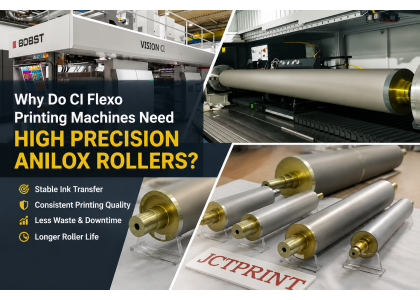
CI flexographic printing machines are widely used in flexible packaging production because of their high printing speed, excellent efficiency, and ability to handle a wide range of film materials.
However, as printing speeds increase and customers demand higher color consistency, the requirements for printing components become more strict.
Among all components in a flexo printing press, the anilox roller plays a critical role in controlling ink transfer.
A high precision anilox roller helps CI flexo presses achieve:
For high-speed flexible packaging printing, choosing the right ceramic anilox roller is essential.
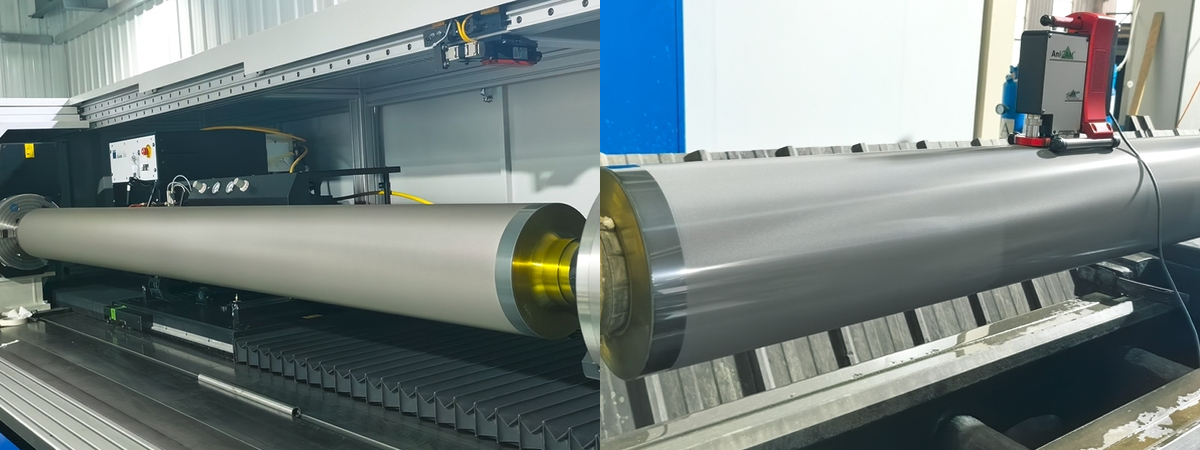
The anilox roller is responsible for transferring a controlled amount of ink from the ink chamber system to the printing plate.
The microscopic cells engraved on the ceramic surface determine how much ink is delivered during printing.
The quality of the anilox roller directly affects:
In CI flexo printing, even small variations in ink transfer can lead to visible color differences, especially during long production runs.
Modern CI flexo presses often operate at very high speeds.
During high-speed production, the printing process requires the anilox roller to maintain:
A low-quality or worn anilox roller may cause:
A precision-manufactured anilox roller helps maintain stable performance throughout production.
Flexible packaging printing often involves:
For packaging manufacturers, color consistency is extremely important.
A high precision anilox roller helps control:
This allows printers to achieve more consistent results between different production batches.
The performance of an anilox roller depends not only on LPI but also on the quality of the engraved cells.
Important factors include:
High-quality laser engraving ensures that each cell transfers ink more consistently.
This is especially important for CI flexo applications where printing speeds and quality requirements are high.
Choosing the correct anilox specification is essential for achieving the desired printing result.
Line Screen (LPI)
Different printing applications require different line screens.
Higher LPI:
Lower LPI:
BCM Volume
BCM determines the amount of ink carried by the anilox roller.
Higher BCM:
Lower BCM:
The correct combination of LPI and BCM helps optimize ink usage and printing quality.
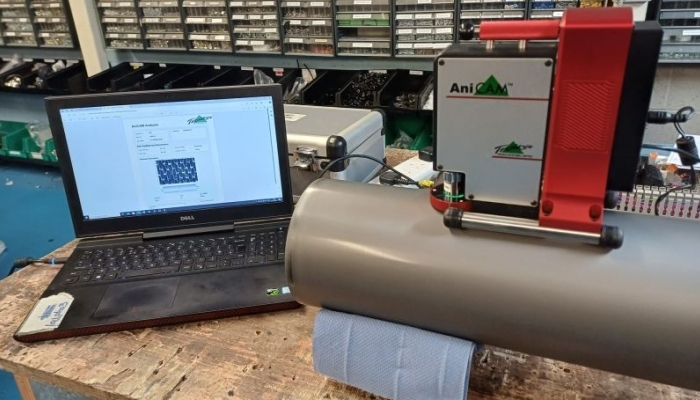
Using an unsuitable or poor-quality anilox roller can create production problems.
Common issues include:
Unstable Printing Color
Different ink transfer volumes can cause color variation.
Poor Ink Coverage
Incorrect cell volume may result in weak or uneven printing.
Frequent Machine Adjustment
Operators may need to constantly adjust settings to maintain print quality.
Shorter Service Life
Poor ceramic coating or inaccurate engraving may reduce roller lifespan.
For high-volume CI flexo production, these problems can increase operating costs.
JCTPRINT specializes in manufacturing customized ceramic anilox rollers for flexographic printing applications.
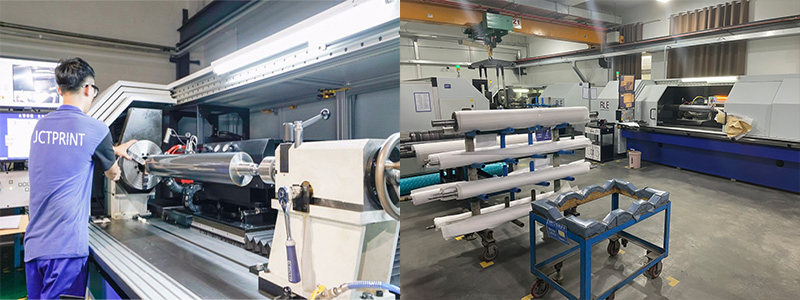
Our production focuses on controlling every important factor that affects printing performance.
High Precision Laser Engraving
Advanced laser engraving technology ensures:
Ceramic Surface Quality Control
The ceramic coating provides:
Strict Inspection Before Delivery
Each anilox roller is inspected for:
This ensures the roller can operate reliably after installation.
Different CI flexo machines and printing applications require different specifications.
JCTPRINT provides customized solutions according to:
Our anilox rollers are suitable for:
We support customers using different flexographic equipment, including:
Before ordering a replacement anilox roller, customers should prepare:
With these details, a suitable anilox solution can be recommended.
For CI flexo printing machines, the anilox roller is one of the most important components affecting ink transfer and printing quality.
A high precision ceramic anilox roller helps flexible packaging manufacturers achieve:
JCTPRINT provides customized high precision anilox rollers for CI flexo and wide web flexographic printing applications.
Send your machine model, roller specifications, or existing drawing to receive a customized solution.


