
Call us toll free:
8619709992541 [email protected]
Jctprint Machinery Co., Ltd
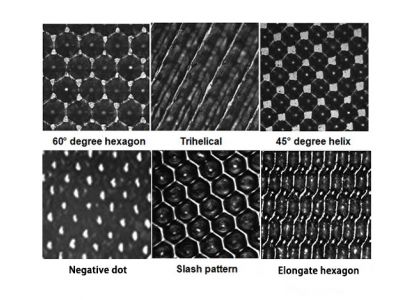
In flexographic printing and coating applications, print quality depends on more than inks, substrates, or machine speed. One of the most important factors is the cell design of the anilox roller. The structure of engraved cells directly affects how ink or coating materials are carried, released, and transferred during production.
Standard anilox specifications may work for some applications, but different production processes often require different transfer characteristics. By optimizing cell volume, line count, and cell geometry, customized cell design can significantly improve printing performance and production efficiency.
At JCTPRINT, customized ceramic anilox rollers are designed according to actual application requirements to help customers achieve stable and repeatable results.
The engraved cells on an anilox roller function as tiny reservoirs that carry and transfer inks or coating materials.
Cell design affects:
Ink transfer volume
Coating consistency
Print density
Image quality
Material consumption
Production stability
When cell specifications do not match production requirements, common problems may occur:
Uneven ink transfer
Excessive ink consumption
Printing defects
Color variation
Poor solid coverage
Reduced print consistency
Proper cell design helps reduce these issues and improves overall production performance.
Cell volume determines the amount of ink or coating material transferred during production.
Different applications require different transfer volumes.
Examples:
Higher cell volume:
Corrugated printing
Large solid printing areas
Heavy coating applications
Lower cell volume:
Fine image printing
High-resolution labels
Precision coating applications
Benefits of optimized cell volume:
✔ Better control of material transfer
✔ Reduced material waste
✔ Improved print consistency
✔ Stable color performance
Line count refers to the number of engraved cells within a defined measurement area.
Different line counts influence print quality and transfer performance.
Typical effects:
Lower line count
Higher ink transfer volume
Suitable for large solids and corrugated printing
Higher line count
Better detail reproduction
Suitable for labels and high-quality printing applications
Benefits of proper line count selection:
✔ Improved image clarity
✔ Better print quality
✔ Reduced printing defects
✔ More consistent transfer performance
Cell geometry determines how materials are released from engraved cells.
Different applications may require different cell shapes depending on material characteristics.
Customized cell geometry helps achieve:
✔ Improved ink release performance
✔ Better transfer efficiency
✔ Reduced material residue inside cells
✔ Stable performance during long production runs
Proper cell geometry becomes especially important for demanding applications such as labels, flexible packaging, and coating processes.
Challenges:
Uneven ink density
Poor solid coverage
Color variation
Customized solutions:
✔ Optimized line count for improved print quality
✔ Customized cell volume for accurate ink transfer
✔ Stable transfer performance during high-speed production
Challenges:
Fine detail reproduction requirements
High print quality expectations
Customized solutions:
✔ High-precision cell structures
✔ Improved image detail and color consistency
✔ Reduced printing defects
Challenges:
Large-area solid printing
High ink transfer requirements
Customized solutions:
✔ Higher transfer volume design
✔ Optimized cell geometry for efficient ink release
✔ Better solid coverage performance
Challenges:
Uneven coating thickness
Excessive material consumption
Customized solutions:
✔ Customized cell volume according to coating weight requirements
✔ Improved transfer efficiency
✔ Stable coating performance
To ensure precise performance, JCTPRINT combines customized engineering with advanced manufacturing technologies.
Technical capabilities include:
✔ Customized cell volume, line count, and cell geometry
✔ Swiss Oerlikon Metco ceramic spraying technology
✔ ALE precision engraving equipment
✔ AniCAM inspection system
✔ Customized ceramic anilox rollers and sleeves
By combining precision engraving with customized design, JCTPRINT helps customers improve transfer performance and reduce production issues.
Customized cell design plays an important role in improving printing performance. By selecting the right combination of cell volume, line count, and cell geometry, manufacturers can achieve better transfer efficiency, improved print quality, and more stable production results.
JCTPRINT provides customized ceramic anilox roller solutions designed for different printing and coating applications.
Contact us to discuss your production requirements and find the right anilox solution.


