
Call us toll free:
8619709992541 [email protected]
Jctprint Machinery Co., Ltd
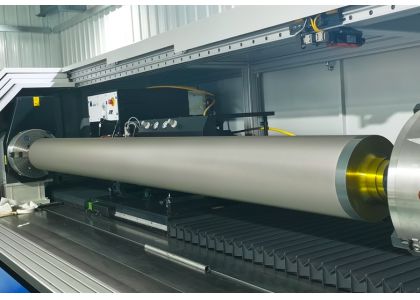
As the demand for high-quality flexible packaging continues to grow, CI (Central Impression) and wide web flexographic printing machines are running faster than ever before. Modern presses can achieve exceptional productivity, but maintaining consistent print quality depends on more than the printing press itself.
One of the most important components in the printing process is the anilox roller.
The anilox roller controls the amount of ink transferred to the printing plate. A well-designed roller ensures stable color density, sharp image reproduction, and efficient ink usage. In contrast, an incorrectly specified or poorly manufactured roller can lead to uneven ink transfer, excessive waste, frequent cleaning, and higher production costs.
Whether you are replacing an existing roller or specifying one for a new printing line, understanding the key selection criteria will help you achieve better printing performance and a longer service life.
This guide explains the five most important factors to consider when choosing an anilox roller for CI and wide web flexographic printing.
Many printers focus on upgrading printing presses, inks, or printing plates while overlooking the condition of the anilox roller. However, the anilox roller is often referred to as the "heart" of the ink delivery system because it determines how much ink reaches the printing plate.
A high-quality ceramic anilox roller offers several important advantages.
1. Consistent Ink Transfer
Uniform cell volume ensures that every rotation transfers the same amount of ink, resulting in stable color throughout long production runs.
2. Better Print Quality
Accurate ink metering produces sharper text, cleaner graphics, smoother gradients, and more consistent solid areas.
3. Reduced Material Waste
Precise ink transfer minimizes over-inking and reduces unnecessary ink consumption, helping lower production costs.
4. Higher Production Efficiency
Stable ink delivery allows presses to operate at higher speeds with fewer adjustments, reducing downtime and increasing overall productivity.
5. Longer Roller Service Life
A high-quality ceramic coating combined with precision laser engraving helps maintain consistent performance for many years under proper maintenance.
For packaging printers operating continuously, selecting the right anilox roller is an investment that improves both product quality and production efficiency.
BCM (Billion Cubic Microns per Square Inch) measures the amount of ink an anilox roller can transfer. It is one of the first specifications engineers consider when selecting a new roller.
Different applications require different ink volumes.
| Printing Application | Recommended BCM |
|---|---|
| Fine Process Printing | Low BCM |
| Label Printing | Medium BCM |
| Flexible Packaging | Medium to High BCM |
| Heavy Coating | High BCM |
| White Ink Printing | High BCM |
Choosing the wrong BCM can significantly affect printing performance.
A BCM that is too high may cause excessive ink transfer, resulting in dirty printing, longer drying times, increased ink consumption, and reduced image sharpness.
Conversely, a BCM that is too low may produce weak colors, poor opacity, and incomplete solid coverage.
Instead of selecting the highest BCM available, manufacturers should match the cell volume to the printing application, substrate, ink type, and production speed.
LPI (Lines Per Inch) indicates the number of engraved cell rows on the surface of the anilox roller.
Generally speaking, higher LPI produces smaller cells that are suitable for fine graphics and high-definition printing, while lower LPI creates larger cells capable of transferring more ink for solid areas and coatings.
Typical recommendations include:
| Printing Type | Recommended LPI |
|---|---|
| Heavy Solid Printing | 200–400 LPI |
| Flexible Packaging | 500–800 LPI |
| High-Definition Printing | 800–1200 LPI |
| Specialty Applications | 1200–2000 LPI |
When selecting LPI, printers should consider several production factors.
1. Printing Resolution
High-resolution graphics require finer cell structures to reproduce small details accurately.
2. Ink Characteristics
Different inks release differently from engraved cells, making the correct LPI important for achieving stable transfer.
3. Plate Technology
Modern digital printing plates often perform best with higher line screens and consistent cell geometry.
4. Printing Speed
High-speed CI flexographic presses require stable ink release to maintain consistent color throughout long production runs.
Selecting the correct combination of BCM and LPI is usually more important than maximizing either value individually.
Although BCM and LPI receive the most attention, cell geometry also has a significant influence on printing performance.
Different engraving patterns release ink differently, affecting transfer efficiency, cleaning performance, and print consistency.
Common cell geometries include:
1. 60° Hexagonal Cells
The industry standard for most flexographic printing applications, offering an excellent balance between ink capacity and release.
2. High Transfer Cells
Designed to improve ink release efficiency, these cells are commonly used for flexible packaging and high-speed printing where stable transfer is essential.
3. Elongated Cells
Suitable for applications requiring greater ink flow, particularly certain coating and specialty printing processes.
4. Channel Cells
Designed to improve ink circulation and reduce the possibility of cell plugging during long production runs.
The most suitable cell geometry depends on several factors, including ink formulation, substrate type, coating weight, and printing speed. A professional manufacturer can recommend the most appropriate engraving pattern based on your production requirements.
The durability of an anilox roller depends largely on the quality of its ceramic coating.
Since engraved cells are continuously exposed to doctor blades, ink, cleaning chemicals, and high-speed operation, the ceramic surface must maintain its hardness and wear resistance over many years of production.
A premium ceramic coating provides several advantages.
1. Excellent Wear Resistance
Hard ceramic surfaces maintain cell geometry even after millions of printing cycles.
2. Superior Corrosion Protection
Modern coatings resist corrosion caused by water-based inks, solvent inks, UV inks, and aggressive cleaning agents.
3. Stable Cell Structure
A dense ceramic layer helps preserve accurate cell dimensions throughout the roller's service life.
4. Lower Maintenance Costs
Durable ceramic surfaces reduce premature wear, extending replacement intervals and lowering long-term operating costs.
With proper maintenance, a high-quality ceramic anilox roller can typically provide reliable performance for 8 to 10 years.
Even with the correct BCM, LPI, and ceramic coating, an anilox roller cannot perform well without precise engraving.
Modern laser engraving technology creates millions of cells with consistent depth, opening size, and volume. This consistency directly influences ink transfer and overall print quality.
When evaluating an anilox roller manufacturer, consider the following factors:
1. Laser Engraving Technology
Advanced laser systems produce highly uniform cell structures with excellent repeatability.
2. Cell Volume Consistency
Every engraved cell should deliver nearly identical ink volume across the entire roller surface.
3. Inspection Equipment
Professional manufacturers verify engraving quality using advanced inspection systems that measure cell volume, cell shape, and engraving accuracy.
4. Dynamic Balancing
Accurate balancing minimizes vibration during high-speed operation and improves printing stability.
5. Manufacturing Precision
Precision machining ensures excellent concentricity and surface accuracy, reducing mechanical variation during printing.
At JCTPRINT, every ceramic anilox roller is manufactured using advanced ALE laser engraving technology and inspected with AniCAM cell measurement systems to ensure stable ink transfer and consistent printing performance. Each roller also undergoes multiple quality inspections and dynamic balancing before shipment, helping customers achieve reliable results in demanding CI and wide web flexographic printing applications.
Even the most advanced CI or wide web flexographic printing press cannot deliver consistent results if the anilox roller is not properly specified or maintained.
Below are five common problems that are often related to an unsuitable anilox roller.
One of the most common printing defects is inconsistent color density. This usually occurs when the engraved cell volume is uneven or the roller no longer transfers ink consistently.
Symptoms include:
Selecting a precision-engraved ceramic anilox roller with consistent cell volume helps maintain stable ink transfer and reduces color variation.
Using an anilox roller with an incorrect BCM may transfer more ink than necessary.
This often results in:
Choosing the correct BCM allows printers to achieve the required print density while minimizing unnecessary ink usage.
Ink, coating, adhesive, and varnish residue gradually accumulate inside engraved cells.
When cell geometry is poorly designed or engraving quality is inconsistent, clogged cells become more common.
As a result, operators spend more time cleaning rollers instead of producing finished products.
Selecting high-quality laser-engraved rollers with optimized cell geometry can significantly reduce cleaning frequency.
Small text, barcodes, QR codes, and fine graphics require extremely consistent ink transfer.
Worn or damaged engraved cells cannot accurately reproduce these details, especially during high-speed printing.
A high-precision ceramic anilox roller helps maintain excellent image sharpness throughout long production runs.
Low-quality ceramic coatings wear more quickly, causing gradual changes in cell volume and ink transfer performance.
Replacing rollers frequently increases production costs and machine downtime.
Premium ceramic coatings combined with precision manufacturing can significantly extend roller life while maintaining consistent print quality.
Modern ceramic anilox rollers are used in a wide range of flexographic printing and coating applications.
Some of the most common industries include:
| Application | Typical Products |
|---|---|
| Flexible Packaging | Food packaging, snack bags, stand-up pouches |
| Plastic Film Printing | PE, PET, BOPP and CPP films |
| Paper Packaging | Kraft paper, shopping bags, paper sacks |
| Label Printing | Pressure-sensitive labels, shrink sleeves |
| Folding Cartons | Pharmaceutical and consumer packaging |
| Industrial Coating | Adhesives, release coatings and specialty coatings |
Whether the application involves ink, varnish, adhesive, or functional coatings, selecting the correct anilox roller is essential for achieving consistent transfer performance.
JCTPRINT manufactures custom ceramic anilox rollers and anilox sleeves for a wide range of CI and wide web flexographic printing machines.
Our products are compatible with many internationally recognized press brands, including:
If you already have an original drawing or technical specifications, we can manufacture a replacement roller according to your requirements. If no drawing is available, our engineering team can also recommend suitable specifications based on your machine model, printing application, and production requirements.
Choosing an anilox roller supplier is about more than purchasing a replacement component. A reliable manufacturer should provide consistent quality, technical support, and customized solutions that help improve long-term production performance.
At JCTPRINT, every anilox roller is manufactured with a strong focus on precision, durability, and consistency.
With over two decades of experience, we understand the performance requirements of CI and wide web flexographic printing across different industries.
Our high-precision ALE laser engraving equipment produces consistent cell geometry and stable cell volume, ensuring reliable ink transfer even during high-speed production.
Each roller is inspected using AniCAM measuring equipment to verify cell volume, engraving quality, and consistency before shipment.
Every roller passes through 18 manufacturing processes, multiple quality inspections, and dynamic balancing to ensure stable operation and long service life.
Our nano-ceramic coating offers excellent wear resistance and corrosion protection, helping many customers achieve a service life of up to 8–10 years under proper operating conditions.
We manufacture ceramic anilox rollers, metal anilox rollers, and anilox sleeves in custom sizes and specifications to match different printing machines and production requirements.
With a complete in-house production system, we offer custom manufacturing with delivery in as little as 25 days, supported by worldwide shipping and responsive technical assistance.
Selecting the right anilox roller is one of the most effective ways to improve print quality, reduce production costs, and increase efficiency in CI and wide web flexographic printing.
Rather than focusing on a single specification, it is important to evaluate the complete combination of BCM, LPI, cell geometry, ceramic coating, and engraving accuracy. When these factors are matched to your specific printing application, the result is more stable ink transfer, lower waste, and longer roller life.
Working with an experienced manufacturer also ensures that every roller is tailored to your press, substrate, ink system, and production goals.
At JCTPRINT, we are committed to providing precision-engineered anilox rollers that help printers achieve consistent performance in demanding production environments.
The correct anilox roller depends on your printing application, ink type, substrate, press speed, BCM, LPI, and desired print quality. An experienced manufacturer can recommend the best specification based on your production requirements.
BCM measures the volume of ink transferred, while LPI indicates the density of engraved cells. Both specifications work together to determine print quality and ink transfer performance.
With proper cleaning and maintenance, a high-quality ceramic anilox roller can typically last 8–10 years, depending on operating conditions and application.
Yes. Custom anilox rollers can be manufactured according to your machine model, technical drawings, roller dimensions, BCM, LPI, and specific printing application.
To provide an accurate recommendation and quotation, it is helpful to supply the machine brand and model, roller dimensions, BCM, LPI (if available), ink type, substrate, and the products you are printing.
Yes. In addition to ceramic anilox rollers, JCTPRINT also manufactures custom anilox sleeves for CI flexographic printing machines, providing solutions for a wide range of packaging and printing applications.
Whether you are replacing an existing roller or planning a new CI or wide web flexographic printing line, choosing the right anilox roller can make a measurable difference in print quality and production efficiency.
Contact JCTPRINT today with your machine model, roller dimensions, or technical drawings. Our engineering team will recommend the most suitable anilox roller solution and provide a fast, customized quotation.


